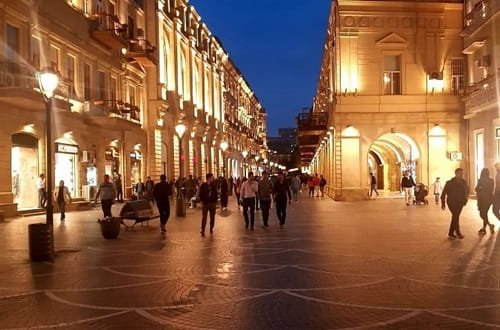
Nizami Street is the most famous shopping and pedestrian street in Baku, Azerbaijan. Located in the heart of the city, the street is known for luxury shopping, cafés, nightlife, historic architecture, and vibrant evening atmosphere.
Often called “Torgovaya” by locals, Nizami Street became one of the cultural and commercial centers of Baku. The street combines European-style architecture, modern retail outlets, restaurants, theatres, and nightlife attractions in one lively urban district.
Today, Nizami Street remains one of Azerbaijan’s biggest tourist attractions and the social heart of central Baku.
| Feature | Details |
| Location | Central Baku, Azerbaijan |
| Famous For | Shopping, nightlife, architecture |
| Local Name | Torgovaya |
| Named After | Poet Nizami Ganjavi |
| Main Attraction | Pedestrian shopping street |
| Popular Among | Tourists, shoppers, locals |
| Best Time to Visit | Evening and nighttime |
| Street Length | Around 3.5 km |
| Known For | Cafés, boutiques, lighting |
| Street Type | Historic commercial avenue |
History of Nizami Street
The history of Nizami Street dates back to Baku’s urban planning expansion during the 19th century.
Historical references mention that the street originated from the city planning project of 1864 when Baku started rapidly developing because of the oil boom.
As oil wealth transformed Baku into one of the richest cities of the Russian Empire, European architects and wealthy merchants constructed elegant buildings along the street. Over time, the road developed into a major commercial and social center.
During the Soviet period, the pedestrian section of the street became widely known as “Torgovaya,” meaning “merchant street” or “shopping street” in Russian. Even today, many residents still use this older name.
The street was later officially named after Nizami Ganjavi, the famous 12th-century Persian poet whose literary legacy remains deeply respected in Azerbaijan.
Today, Nizami Street reflects both historic Baku and modern Azerbaijan together in one place.
Location and Connectivity
Nizami Street is located in downtown Baku near Fountain Square and the Old City area.
Its central position makes it easily accessible from most tourist and business districts of the city.
By Metro
Nearby metro stations include:
- Sahil Metro Station
- Nizami Metro Station
- Icherisheher Metro Station
By Road
Taxis, buses, and ride-sharing services regularly connect the area with other parts of Baku.
Nearby Landmarks
Some important nearby attractions include:
- Fountain Square
- Old City (Icherisheher)
- Maiden Tower
- Azerbaijan State Academic Opera and Ballet Theatre
What Is Nizami Street Famous For?
1. Shopping and Luxury Brands
The biggest reason behind the popularity of Nizami Street is shopping.
The avenue contains:
- International fashion brands
- Luxury boutiques
- Souvenir shops
- Electronics stores
- Local retail outlets
It is widely considered Baku’s premium shopping destination.
2. Beautiful Architecture
Nizami Street is famous for its architecture combining:
- Baroque styles
- Neo-Renaissance buildings
- Neoclassical façades
- Soviet-era structures
- Modern glass buildings
Architectural historians describe the street as one of Baku’s most visually impressive urban spaces.
3. Nightlife and Evening Atmosphere
The street becomes especially lively at night.
Decorative lighting, illuminated buildings, music, cafés, and crowds create one of the most vibrant nighttime atmospheres in Baku.
Tourists often describe evening walks on Nizami Street as one of the highlights of visiting Azerbaijan.
4. Restaurants and Cafés
Nizami Street contains many restaurants, dessert shops, and coffee chains serving:
- Azerbaijani cuisine
- Turkish food
- European dishes
- Fast food
- Desserts and coffee
Outdoor seating areas remain crowded during evenings and weekends.
5. Cultural Importance
The street also has cultural significance because of nearby theatres, museums, and historic landmarks.
Important nearby institutions include:
- Azerbaijan State Theatre venues
- Nizami Museum of Literature
- National Art Museum
Why Nizami Street Became Important
Several reasons helped Nizami Street become one of the most important roads in Azerbaijan.
First, the Baku oil boom created enormous wealth that funded major European-style urban development.
Second, the street’s central location helped it become a major commercial district.
Third, tourism growth in Azerbaijan transformed Nizami Street into an international attraction for shopping and nightlife.
Today, it functions as both a cultural landmark and a modern entertainment zone.
Interesting Facts About Nizami Street
- The street is around 3.5 kilometers long.
- Many locals still call it “Torgovaya.”
- The street is named after poet Nizami Ganjavi.
- Architecture on the street includes Baroque, Neo-Gothic, and Soviet styles.
- Nizami Street is considered Baku’s main pedestrian shopping avenue.
Challenges Faced by the Area
Like many major tourist districts, Nizami Street faces challenges such as:
- Overcrowding
- High tourist traffic
- Rising commercial rents
- Traffic pressure around nearby roads
- Heavy commercialization
Rapid modernization has also created debates about balancing heritage preservation with modern urban development.
Despite this, Nizami Street continues to remain one of the most iconic streets in the Caucasus region.
FAQs About Nizami Street, Baku
Q1. Why is Nizami Street famous in Baku?
Nizami Street is famous for shopping, nightlife, architecture, cafés, and pedestrian street culture.
Q2. Where is Nizami Street located?
The street is located in central Baku, Azerbaijan near Fountain Square and the Old City.
Q3. Why is Nizami Street called Torgovaya?
“Torgovaya” was the older Russian-era name meaning “shopping street” or “merchant street.”
Q4. Who was Nizami Ganjavi?
Nizami Ganjavi was a famous 12th-century Persian poet highly respected in Azerbaijani cultural history.
Q5. What is the best time to visit Nizami Street?
Evening and nighttime are considered the best times because of lighting, cafés, and nightlife activity.
Q6. What can tourists do on Nizami Street?
Visitors can shop, dine, explore architecture, enjoy nightlife, and visit nearby cultural attractions.
Q7. What are the major problems faced by the area?
Overcrowding, commercialization, and tourist pressure are some of the main challenges affecting the locality.