Few streets in the world are as instantly recognisable as Baker Street. Located in the Marylebone district of central London, this historic road has earned a place in global popular culture that goes far beyond its considerable practical importance as a commercial and residential thoroughfare. From its Victorian terraces and Georgian townhouses to its busy underground station and world-famous museum, Baker Street carries a personality that is simultaneously literary, historical, and thoroughly alive with the energy of a modern London neighbourhood.
For Londoners, Baker Street is a familiar transit hub and a comfortable stretch of cafés, shops, and offices in one of the city’s most well-connected central zones. For visitors from around the world, it is a pilgrimage destination of sorts, drawn by the magnetic pull of one address above all others — 221B Baker Street, the fictional home of the world’s most celebrated detective, Sherlock Holmes.
Quick Overview of Baker Street, London
| Feature | Details |
| Location | Marylebone, City of Westminster, London |
| Nearby Area | Regent’s Park, Portman Square, Oxford Street, Mayfair |
| Length | Approximately 1 km |
| Famous For | Sherlock Holmes Museum, Baker Street Underground Station, Marylebone heritage |
| Historical Period | Developed from the mid-18th century onwards |
| Best Time to Visit | Year-round; spring and summer for outdoor exploration |
| Nearest Tube Station | Baker Street Station (Bakerloo, Circle, Hammersmith & City, Jubilee, Metropolitan lines) |
| Popular Crowd | Tourists, commuters, professionals, literature enthusiasts |
| Main Attractions | Sherlock Holmes Museum, Baker Street Station, Madame Tussauds, Regent’s Park |
| Street Type | Mixed-use urban road with heritage, retail, and residential character |
History of Baker Street
The history of Baker Street begins in the mid-eighteenth century when the land in this part of Marylebone was developed by Sir Edward Baker, after whom the street takes its name. The area was part of a broader wave of urban expansion that transformed the fields north of Oxford Street into an elegant residential neighbourhood during the Georgian era.
By the early nineteenth century, Baker Street had established itself as a respectable address in the fashionable northern fringes of central London. Its Georgian and early Victorian townhouses attracted professionals, merchants, and members of the upper middle class who valued its proximity to the West End while enjoying the relative quiet of Marylebone.
The street’s place in cultural history was secured not by anything that happened there in reality, but by the imagination of one writer. In 1887, Arthur Conan Doyle introduced the world to Sherlock Holmes and his companion Dr. John Watson, placing them at the fictional address of 221B Baker Street. At the time, Baker Street did not even have a number that high, but the choice of address was deliberate — Conan Doyle wanted a street that sounded plausible and respectable without being too grand.
The effect was permanent and transformative. As the Sherlock Holmes stories became globally beloved across the late nineteenth and twentieth centuries, Baker Street became one of the most recognisable addresses on earth. The Abbey National building, which for many decades occupied the stretch of Baker Street that included the 221B range of numbers, famously employed a secretary whose sole responsibility was answering the thousands of letters addressed to Sherlock Holmes that arrived every year.
Baker Street also holds a significant place in transport history. Baker Street Station, which opened in 1863, was one of the original stations on the Metropolitan Railway, the world’s first underground passenger railway. This makes it one of the oldest operational metro stations anywhere on the planet.
Location and Connectivity
Baker Street runs roughly north to south through the Marylebone district of the City of Westminster in central London. It connects Portman Square at its southern end with Regent’s Park at its northern end, passing through one of the most well-connected neighbourhoods in the capital.
By Tube
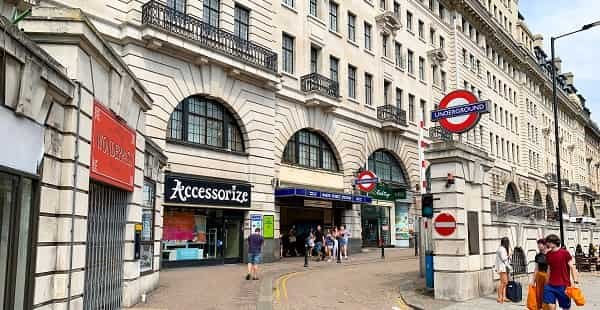
Baker Street Station is one of the busiest and best-connected stations in central London, served by five lines — the Bakerloo, Circle, Hammersmith and City, Jubilee, and Metropolitan lines. This exceptional connectivity makes Baker Street accessible from virtually every part of London within a short journey.
By Bus
Numerous bus routes serve Baker Street and the surrounding Marylebone area. The road itself carries regular bus services connecting it to Oxford Street, Regent’s Park, and destinations across north and central London.
By Road
Baker Street is easily accessible by car and taxi from the A40, Marylebone Road, and Oxford Street. However, central London traffic and congestion charges apply in the area, making public transport the preferred option for most visitors.
Nearby Landmarks
Some popular nearby places include:
- Regent’s Park and Queen Mary’s Gardens
- Madame Tussauds
- The Wallace Collection
- Marylebone High Street
- Oxford Street
What Is Baker Street Famous For?
1. The Sherlock Holmes Museum
The most visited attraction on Baker Street is without question the Sherlock Holmes Museum at 221B Baker Street. The museum recreates in meticulous detail the Victorian sitting room and study described by Arthur Conan Doyle in the original stories, complete with Holmes’s violin, chemistry equipment, and the famous armchair by the fireplace. Visitors queue outside the black door beneath the iconic address plaque daily, and the museum has become one of London’s most popular literary landmarks. A statue of Holmes stands outside Baker Street Station, pipe in hand, as a further tribute to the street’s most famous resident.
2. Baker Street Underground Station
Baker Street Station is a landmark in its own right. As one of the original stations on the world’s first underground railway, opened in 1863, it carries enormous historical significance for anyone interested in transport history. The station’s platform walls feature distinctive Sherlock Holmes silhouette tiles, and the Victorian brickwork of parts of the station gives it a character that the newer glass-and-steel stations of the network cannot match.
3. Madame Tussauds
Located just off Baker Street on Marylebone Road, Madame Tussauds is one of the most visited tourist attractions in the entire United Kingdom. The wax figure museum draws millions of visitors every year and is a natural companion stop for anyone spending time on Baker Street.
4. Marylebone Village and High Street
The Baker Street area sits at the edge of Marylebone Village, one of London’s most charming and well-regarded neighbourhood retail and dining destinations. Marylebone High Street, a short walk from Baker Street, is lined with independent boutiques, restaurants, bookshops, and cafés that give the area a village-like quality rarely found this close to the centre of a major world city.
5. Georgian and Victorian Architecture
Baker Street and the surrounding Marylebone streets contain some of London’s finest surviving Georgian and Victorian residential architecture. The stucco-fronted terraces, wrought iron railings, and period facades give the area a visual elegance that makes it popular with photographers, filmmakers, and architecture enthusiasts. The street has been used as a filming location for numerous period productions drawn by its well-preserved historic streetscape.
6. Regent’s Park
At its northern end, Baker Street opens out towards Regent’s Park, one of the largest and most beautiful royal parks in London. The park contains Queen Mary’s Gardens, the London Zoo, an open-air theatre, and vast expanses of formal gardens and open lawns. For visitors to Baker Street, the park provides a natural extension to the day, offering a peaceful contrast to the busy commercial street.
Best Time to Visit Baker Street
Baker Street can be visited comfortably throughout the year. Spring and early summer, from April through June, are considered the most pleasant months, when Regent’s Park is in full bloom and the longer daylight hours make walking the area particularly enjoyable.
Summer brings the highest volume of tourists, with queues at the Sherlock Holmes Museum growing considerably longer in July and August. Visitors who want to explore the museum without excessive waiting are advised to book tickets in advance or arrive early in the morning.
Autumn offers cooler temperatures and fewer crowds, while the Victorian atmosphere of the street takes on a particularly atmospheric quality on misty autumn evenings. Winter visits during the Christmas season bring festive decorations and a certain Dickensian charm to the neighbourhood that fans of the era will find appealing.
Interesting Facts About Baker Street
- Baker Street Station opened on 10 January 1863 as part of the Metropolitan Railway, making it one of the stations that launched the world’s first urban underground railway system.
- The Sherlock Holmes Museum receives visitors from over 180 countries every year, reflecting the global reach of Arthur Conan Doyle’s creation.
- For several decades, the Abbey National building at 221-229 Baker Street received tens of thousands of letters addressed to Sherlock Holmes annually and employed dedicated staff to respond to them.
- The platform walls of Baker Street Station are decorated with repeated silhouette motifs of Sherlock Holmes, making it the only London Underground station whose decor is dedicated to a fictional character.
- Baker Street has appeared in numerous film and television productions, including multiple Sherlock Holmes adaptations, owing to its well-preserved Victorian and Edwardian streetscape.
Challenges Faced by the Area
Like most busy streets in central London, Baker Street faces the pressures that come with high footfall, commercial density, and the competing demands of tourism, commuter traffic, and residential life.
Tourist congestion around the Sherlock Holmes Museum can spill onto the pavement and cause pedestrian bottlenecks, particularly during summer weekends. The narrow stretch of pavement in front of 221B frequently struggles to accommodate the volume of visitors wanting to photograph the famous address.
Traffic on Baker Street itself and on Marylebone Road remains heavy throughout the day, and air quality in the immediate area reflects the broader challenge facing central London streets with high vehicle density. Balancing the heritage character of the area with the demands of modern retail and commercial development is an ongoing consideration for Westminster City Council and local stakeholders.
FAQs About Baker Street, London
Q: Why is Baker Street famous?
A: Baker Street is famous primarily as the fictional home address of Sherlock Holmes, the detective created by Arthur Conan Doyle. It is also historically significant as the location of one of the world’s oldest underground railway stations.
Q: Where is the Sherlock Holmes Museum?
A: The Sherlock Holmes Museum is located at 221B Baker Street, London. It recreates the Victorian rooms described in Conan Doyle’s stories and is open to visitors daily.
Q: Which tube lines serve Baker Street Station?
A: Baker Street Station is served by five lines — the Bakerloo, Circle, Hammersmith and City, Jubilee, and Metropolitan lines — making it one of the most connected stations in central London.
Q: When did Baker Street Station open?
A: Baker Street Station opened on 10 January 1863 as one of the original stations on the Metropolitan Railway, the world’s first underground passenger railway.
Q: Is Madame Tussauds near Baker Street?
A: Yes, Madame Tussauds is located on Marylebone Road, just a short walk from Baker Street Station, and is one of the most visited attractions in the United Kingdom.
Q: Is Baker Street good for shopping and dining?
A: Baker Street itself has a range of cafés, restaurants, and shops, and is within easy walking distance of Marylebone High Street, which is regarded as one of London’s finest neighbourhood retail and dining destinations.
Q: Is Baker Street suitable for families?
A: Yes, the combination of the Sherlock Holmes Museum, Madame Tussauds, and nearby Regent’s Park with its zoo and open spaces makes Baker Street and its surroundings an excellent destination for families visiting London.