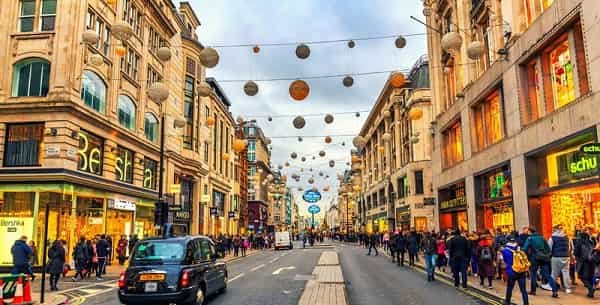
Oxford Street is one of the most famous shopping streets in the world. Located in the heart of London’s West End, the street is known for fashion stores, department stores, Christmas lights, tourism, and historic commercial culture.
Stretching for around 1.2 miles, Oxford Street attracts millions of visitors every year. From luxury brands and flagship stores to cafés, theatres, and street performances, the area represents the modern shopping identity of London.
Today, Oxford Street remains one of Europe’s busiest retail streets and a major tourist attraction in the United Kingdom.
Quick Overview of Oxford Street, London
| Feature | Details |
| Location | West End, London, England |
| Famous For | Shopping, fashion stores, department stores |
| Length | Around 1.2 miles |
| Old Name | Tyburn Road |
| Main Attractions | Selfridges, fashion brands, Christmas lights |
| Nearby Areas | Regent Street, Bond Street, Soho |
| Best Time to Visit | Evening and festive seasons |
| Nearest Stations | Oxford Circus, Bond Street, Marble Arch |
| Popular Among | Tourists, shoppers, fashion lovers |
| Street Type | Commercial and shopping street |
History of Oxford Street
The history of Oxford Street dates back to Roman Britain.
Originally, the route formed part of the Roman road called Via Trinobantina, which connected different regions through London. During the medieval period, the road became known as Tyburn Road and later gained a dark reputation because prisoners were transported along it to the Tyburn gallows near present-day Marble Arch.
In the 18th century, the road gradually became known as Oxford Street, reportedly named after the Earl of Oxford. As London expanded, the area slowly transformed from residential housing into a commercial district.
By the 19th century, Oxford Street had become strongly associated with retail shopping and department stores. Famous stores such as Selfridges and John Lewis later became iconic parts of the street’s identity.
During World War II, parts of Oxford Street suffered bombing damage, but the street eventually rebuilt and modernized itself again. Today, it continues evolving with new redevelopment projects and pedestrian-friendly plans.
Location and Connectivity
Oxford Street is located in central London’s West End area.
The street runs between Marble Arch and Tottenham Court Road while connecting important commercial zones such as Regent Street and Bond Street.
By London Underground
Several London Underground stations serve Oxford Street including:
- London Underground Oxford Circus
- Bond Street
- Marble Arch
- Tottenham Court Road
By Bus
Many London bus routes operate around Oxford Street, though future redevelopment plans aim to reduce traffic congestion in some sections.
Nearby Landmarks
Some important nearby attractions include:
- Regent Street
- Bond Street
- Soho
- Hyde Park
Its central location makes it one of London’s busiest tourist and shopping areas.
What Is Oxford Street Famous For?
1. Shopping and Fashion Stores
The biggest reason behind the popularity of Oxford Street is shopping.
The street contains more than 300 stores including:
- Fashion brands
- Department stores
- Beauty outlets
- Sportswear shops
- Luxury retailers
It is widely considered Europe’s most visited shopping street.
2. Famous Department Stores
Oxford Street is home to globally recognized department stores including:
- Selfridges
- John Lewis
These stores attract tourists from around the world because of their scale, window displays, and premium shopping experience.
3. Christmas Lights
Oxford Street’s Christmas lighting is one of London’s most famous festive attractions.
Every winter, the street is decorated with massive lighting displays that attract huge crowds of tourists and local visitors.
4. Tourism and Entertainment
Apart from shopping, the area is also known for restaurants, theatres, cafés, and entertainment venues.
Tourists often combine visits to Oxford Street with nearby Soho, Covent Garden, and Regent Street.
5. Historic Retail Culture
Oxford Street played a major role in shaping modern retail culture in London.
Many iconic British retail brands developed their flagship stores in this area over the last two centuries.
Best Time to Visit Oxford Street
The best time to visit Oxford Street is during evenings and festive seasons.
December is especially popular because of Christmas lights and holiday shopping crowds.
Weekday mornings are generally less crowded compared to weekends.
Interesting Facts About Oxford Street
- Oxford Street originally formed part of a Roman road system.
- It was once called Tyburn Road during medieval times.
- The street receives hundreds of millions of visitors annually.
- It contains more than 300 retail stores.
- Oxford Street is undergoing major pedestrian-friendly redevelopment projects.
Challenges Faced by the Area
Despite its global popularity, Oxford Street faces several challenges.
Heavy tourist crowds, traffic congestion, rising commercial rents, and competition from online shopping have affected businesses over recent years. Several major retail stores also closed after the pandemic period.
Authorities are now working on redevelopment and pedestrianisation projects to improve the visitor experience and modernize the street.
Still, Oxford Street continues to remain one of the world’s most recognized shopping destinations.
FAQs About Oxford Street, London
Q: Why is Oxford Street famous in London?
A: Oxford Street is famous for shopping, department stores, fashion brands, Christmas lights, and tourism.
Q: What was the old name of Oxford Street?
A: The street was previously known as Tyburn Road during medieval times.
Q: Which stores are famous on Oxford Street?
A: Famous stores include Selfridges and John Lewis along with many global fashion brands.
Q: How long is Oxford Street?
A: Oxford Street stretches for around 1.2 miles across central London.
Q: Why is Oxford Street important for tourism?
A: Tourists visit for shopping, entertainment, restaurants, historic retail culture, and Christmas decorations.
Q: Which metro stations are near Oxford Street?
A: Oxford Circus, Bond Street, Marble Arch, and Tottenham Court Road stations are located nearby.
Q: Is Oxford Street becoming pedestrian-only?
A: London authorities announced redevelopment plans to pedestrianise parts of Oxford Street to improve public space and tourism.