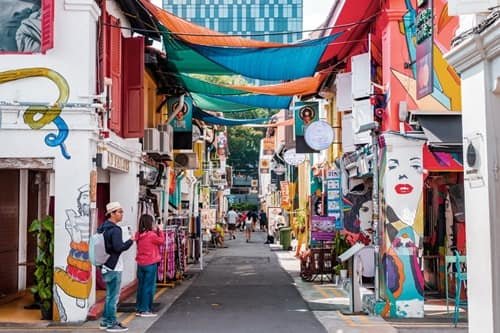
Haji Lane is one of the most famous and colorful streets located in the Kampong Glam neighborhood of Singapore. The lane is closely associated with street art, indie boutiques, cafés, Arab-Muslim heritage, and Singapore’s modern creative culture. Today, the narrow street attracts tourists, photographers, shoppers, and café lovers from around the world.
Located near Arab Street and Sultan Mosque, Haji Lane forms part of Singapore’s historic Kampong Glam district, one of the city’s oldest cultural quarters.
| Feature | Details |
| Location | Kampong Glam, Singapore |
| Famous For | Street art, cafés, indie boutiques |
| Main Identity | Historic cultural and lifestyle street |
| Nearby Areas | Arab Street, Bugis, Kampong Glam |
| Popular Among | Tourists, photographers, café visitors |
| Best Time to Visit | Evening and night hours |
| Nearby MRT Station | Bugis MRT Station |
| Known For | Colorful murals and creative culture |
| Street Type | Narrow heritage lane |
| Historical Importance | Linked with Muslim pilgrimage history |
History of Haji Lane
The history of Haji Lane goes back to Singapore’s early colonial period.
The name “Haji” comes from the Islamic pilgrimage to Mecca, known as the Hajj. Historical accounts mention that many Muslim pilgrims and Arab traders once stayed in the shophouses along the lane before traveling to Mecca. Pilgrim brokers also operated from the locality.
During the 19th and early 20th centuries, Kampong Glam developed as an important settlement for:
- Arab traders
- Malay communities
- Muslim pilgrims
- Textile merchants
- Bugis traders
- Indian Muslim businesses
The shophouses along Haji Lane reportedly served as lodging spaces for pilgrims traveling across Southeast Asia.
In the 1960s and 1970s, the area became a residential zone for poorer Malay families, while some old buildings were later used as storage spaces.
The major transformation happened during the early 2000s when artists, boutique owners, cafés, and creative entrepreneurs began opening shops inside the old shophouses. The lane gradually became one of Singapore’s trendiest lifestyle destinations.
Location and Connectivity
Haji Ln is located inside the Kampong Glam district near Bugis in Singapore.
The locality remains highly accessible because of strong MRT and road connectivity.
By MRT
Nearby MRT stations include:
- Bugis MRT Station
- Lavender MRT Station
- Nicoll Highway MRT connectivity routes
By Road
The locality is connected through:
- Arab Street
- Beach Road
- North Bridge Road
- Victoria Street
Taxis, buses, and MRT connectivity make the locality easy to access.
Nearby Landmarks
Important nearby places include:
- Sultan Mosque
- Arab Street
- Kampong Glam
- Bugis Street
- Malay Heritage Centre
What Is Haji Lane Famous For?
1. Street Art and Murals
The biggest reason behind the popularity of Haji Lane is its colorful street art.
The lane is filled with:
- Large murals
- Graffiti art
- Creative wall paintings
- Instagram photography spots
- Artistic storefronts
This vibrant visual atmosphere became one of the defining features of the locality.
2. Indie Boutiques
Haji Lane is famous for its independent fashion and lifestyle stores.
Visitors can find:
- Vintage clothing
- Handmade accessories
- Designer boutiques
- Local fashion brands
- Unique gift shops
The street became known as Singapore’s indie shopping destination during the 2000s.
3. Café and Nightlife Culture
The locality also became popular for:
- Trendy cafés
- Dessert shops
- Cocktail bars
- Rooftop dining
- Live music spaces
The area remains especially crowded during evening hours.
4. Kampong Glam Heritage
Haji Lane forms part of Singapore’s historic Kampong Glam district, which preserves strong Malay-Muslim cultural heritage.
5. Heritage Shophouses
The lane is lined with restored 19th-century shophouses that still preserve elements of old Singapore architecture.
Why Haji Lane Became Important
Several reasons helped Haji Lane become internationally famous.
First, the locality had historical importance connected with Muslim pilgrimage culture.
Second, the restoration of old shophouses attracted creative businesses and tourism.
Third, social media popularity and street photography helped increase global attention.
Today, Haji Lane remains one of Singapore’s most recognizable cultural and lifestyle streets.
Interesting Facts About Haji Lane
- Haji Lane is considered one of Singapore’s narrowest streets.
- The lane was historically connected with Hajj pilgrims.
- Kampong Glam was once the seat of Malay royalty in Singapore.
- The street became a major creative hub during the early 2000s.
- Street murals are constantly updated by artists and businesses.
Challenges Faced by the Area
Like many famous tourist streets, Haji Lane faces several urban challenges.
These include:
- Tourist overcrowding
- Rising commercial rents
- Noise during nightlife hours
- Heavy pedestrian movement
- Preservation pressure on heritage buildings
Despite these challenges, the lane continues preserving both Singapore’s heritage and modern creative culture.
FAQs About Haji Lane, Singapore
Q1. Why is Haji Lane famous?
A: Haji Lane is famous for street art, indie boutiques, cafés, and colorful heritage shophouses.
Q2. Where is Haji Lane located?
A: Haji Lane is located in the Kampong Glam district near Bugis in Singapore.
Q3. Why is it called Haji Lane?
A: The lane received its name because Muslim pilgrims and pilgrimage brokers once stayed and operated there before traveling to Mecca.
Q4. Which MRT station is nearest to Haji Lane?
A: Bugis MRT Station is one of the nearest MRT stations.
Q5. What is Kampong Glam famous for?
A: Kampong Glam is famous for Malay-Muslim heritage, Sultan Mosque, Arab Street, cafés, and historic shophouses.
Q6. What can visitors do at Haji Lane?
A: Visitors can explore boutiques, cafés, murals, bars, heritage streets, and local creative shops.
Q7. What are the major problems faced by the area?
A: Tourist crowding, rising rents, nightlife pressure, and heritage preservation challenges are major issues faced by the locality.