Yes, a private security agency business is legal in India, provided it obtains the required licence under the Private Security Agencies (Regulation) Act, 2005 (PSARA) and complies with the applicable central and state rules. Operating a security agency without the required PSARA licence can result in penalties and other legal consequences.
Private security agencies provide trained personnel to protect residential societies, offices, factories, hospitals, banks, educational institutions and commercial establishments. Since security guards perform sensitive duties involving public safety and access control, the industry is strictly regulated. Business registration alone is not sufficient to operate a private security agency.
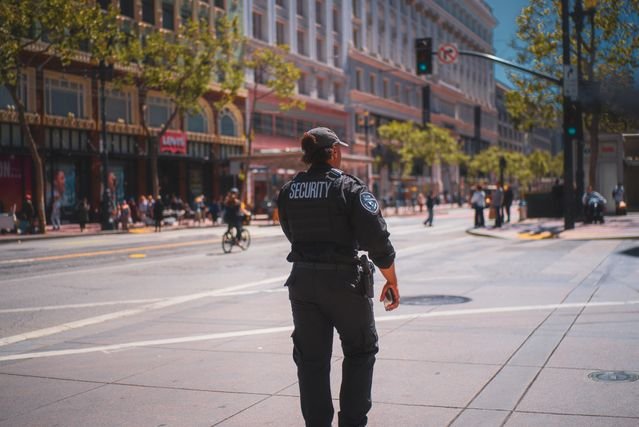
Legal Status of Private Security Agencies in India
Running a private security agency is legal throughout India. However, every agency must comply with the Private Security Agencies (Regulation) Act, 2005 and the corresponding state rules.
A security agency cannot begin supplying security guards merely after registering a company or obtaining a GST number. A valid PSARA licence issued by the competent authority in the relevant state or Union Territory is generally required before commencing operations.
Agencies must also comply with labour laws, tax laws and other applicable regulations.
Business Registration
A private security agency may operate as a sole proprietorship, partnership, LLP or private limited company.
Common business registrations may include:
- PAN and a business bank account
- Registration of the business entity
- Shops and Establishments registration
- GST registration when applicable
- Professional tax registration in applicable states
- Udyam registration for eligible MSMEs
These registrations do not replace the requirement to obtain a PSARA licence.
PSARA Licence Requirements
Before starting operations, the agency should obtain a PSARA licence from the designated Controlling Authority of the concerned state or Union Territory.
The licensing process generally involves:
- Submission of the prescribed application
- Verification of promoters
- Police verification where required
- Proof of office premises
- Training arrangements for security guards
- Uniform details
- Compliance with eligibility requirements under PSARA
Since each state has its own PSARA Rules, documentation and procedural requirements may differ.
Recruitment and Training of Security Guards
Private security agencies must recruit suitable personnel and comply with the training requirements prescribed under PSARA and the applicable state rules.
Security guards should receive training covering areas such as:
- Access control
- Crowd management
- Emergency response
- Fire safety
- First aid
- Legal responsibilities
- Communication skills
- Professional conduct
Background verification of guards should be completed before deployment wherever required by law.
Uniforms, Records and Operational Compliance
Security guards should wear uniforms that are clearly distinguishable from those of the police or armed forces.
The agency should maintain proper records relating to:
- Employee details
- Police verification records
- Training certificates
- Attendance registers
- Client agreements
- Salary and wage records
- Duty rosters
- Identity cards issued to guards
Proper documentation assists in regulatory compliance and inspection by the authorities.
Labour Law and Tax Compliance
Private security agencies are employers and must comply with applicable labour laws.
Depending on the size and nature of the business, compliance may include:
- Payment of statutory wages
- EPF registration where applicable
- ESI registration where applicable
- Payment of bonus and leave benefits where required
- Compliance with working-hour regulations
- GST registration when applicable
- Income-tax compliance and TDS obligations
The agency should also maintain payroll records and statutory registers as required by law.
When Can a Private Security Agency Become Illegal?
A private security agency may face legal action when it:
- Operates without a valid PSARA licence.
- Supplies security guards after licence expiry or suspension.
- Employs guards without required verification or training.
- Uses uniforms resembling those of the police or armed forces.
- Maintains false employee or client records.
- Violates labour laws relating to wages or employee benefits.
- Fails to comply with GST or tax obligations.
- Provides armed security without the necessary legal authorisation.
- Makes false claims regarding government approval or certification.
Authorities may suspend or cancel the licence, impose penalties or initiate prosecution depending on the nature of the violation.
Frequently Asked Questions
Q1. Is a PSARA licence mandatory to start a private security agency?
A: Yes. In most cases, a valid PSARA licence is mandatory before providing private security services in India.
Q2. Can one PSARA licence be used throughout India?
A: Not necessarily. A PSARA licence is generally issued for a particular state or specified area. Agencies wishing to operate in multiple states may need separate licences in accordance with the applicable state rules.
Q3. Can a private security agency provide armed guards?
A: Only where permitted by law. Armed security services involve additional legal requirements relating to firearms, licences and regulatory approvals. An ordinary PSARA licence does not automatically authorise the deployment of armed guards.
Q4. Can retired police or defence personnel start a security agency?
A: Yes. Retired police officers and members of the armed forces may establish a private security agency, provided they satisfy the eligibility conditions and obtain the required PSARA licence before commencing operations.
Bottom Line
A private security agency business is legal in India, but it is one of the most regulated service industries. In addition to ordinary business registrations, obtaining a valid PSARA licence is generally mandatory before providing security services. Agency owners should recruit and train qualified personnel, comply with labour and tax laws, maintain proper records and ensure ongoing compliance with the applicable state PSARA Rules. Operating without the required licence or ignoring statutory obligations can result in serious legal consequences.