Few streets in Southeast Asia carry the kind of legendary status that Bugis Street does. Located in the Bugis neighbourhood of central Singapore, this iconic destination has lived multiple lives across its long and colourful history, transforming from a notorious red-light district and nocturnal street market into one of Singapore’s most visited shopping and lifestyle destinations. The journey of Bugis Street from its wild, unruly past to its present incarnation as a bustling retail corridor is one of the most dramatic urban transformation stories in modern Asian history.
For Singaporeans, Bugis Street is a familiar and affordable shopping destination woven into the fabric of everyday city life. For tourists, it offers an accessible, energetic, and distinctly local retail experience that stands in pleasing contrast to the polished luxury malls that dominate much of central Singapore.
| Feature | Details |
| Location | Bugis, Victoria Street, Singapore |
| Nearby Area | Arab Street, Little India, Bras Basah, Kampong Glam |
| Famous For | Affordable fashion, street market, food, nightlife history, cultural heritage |
| Historical Period | Active since the 1950s; redeveloped in 1991 |
| Best Time to Visit | Evenings and weekends |
| Nearest MRT Station | Bugis MRT Station, East-West and Downtown Lines |
| Popular Crowd | Tourists, students, young shoppers, bargain hunters |
| Main Attractions | Bugis Street market, Bugis Junction, Bugis+ mall, street food |
| Street Type | Open-air street market adjacent to integrated mall complex |
History of Bugis Street
The history of Bugis Street stretches back to the early colonial period of Singapore. The area takes its name from the Bugis people, seafaring traders from the island of Sulawesi in present-day Indonesia, who were among the earliest and most significant trading communities to settle in Singapore after Sir Stamford Raffles established the British colonial port in 1819. The Bugis traders operated from this part of the city and gave the neighbourhood its enduring name.
Through the late nineteenth and early twentieth centuries, the area around Bugis Street developed into a busy commercial and residential neighbourhood populated by a diverse mix of communities. The street itself became known for its market activity and street trade that catered to the working-class population of the surrounding area.
The most famous and controversial chapter of Bugis Street’s history began in the 1950s and continued through the 1970s and into the 1980s. During this period, the street became internationally notorious as a gathering place for transgender women, known locally as Ah Kuas, who congregated there after midnight, transforming the street into a spectacular and chaotic nocturnal carnival that attracted curiosity seekers, tourists, and photographers from around the world. The street market that ran alongside this scene sold food, goods, and souvenirs in a chaotic open-air format that gave Bugis Street a raw, unfiltered energy unlike anywhere else in the city.
Singapore’s rapid urban transformation in the 1980s brought this era to an end. The government cleared the original Bugis Street in 1985 as part of broader urban redevelopment plans. The loss was felt widely, and public demand for the revival of some version of the street market led to the creation of a new Bugis Street market in 1991, relocated slightly and significantly sanitised, but retaining the open-air market format and affordable shopping character that had made the original famous.
Today the reconstructed Bugis Street market operates alongside Bugis Junction mall and Bugis+ mall, forming an integrated retail destination that draws millions of visitors annually.
Location and Connectivity
Bugis Street is located in the Bugis neighbourhood of central Singapore, on Victoria Street near the junction with Queen Street. Its position in the city centre makes it one of the most accessible shopping destinations in Singapore.
By MRT
Bugis MRT Station, served by both the East-West Line and the Downtown Line, is directly connected to Bugis Junction mall and a short walk from the open-air Bugis Street market. This makes it among the most conveniently accessible retail destinations in the entire city.
By Bus
Multiple bus services run along Victoria Street and the surrounding roads, connecting Bugis to most parts of Singapore efficiently.
By Cab or Ride-Hailing
Grab and taxi services are available throughout the day and evening. The central location makes cab access straightforward from any part of the island.
Nearby Landmarks
Some popular nearby places include:
- Arab Street and Kampong Glam
- Little India
- Bras Basah Complex
- National Museum of Singapore
- Waterloo Street temples
What Is Bugis Street Famous For?
Affordable Fashion and Clothing
The open-air Bugis Street market is most celebrated for its affordable fashion. Hundreds of stalls sell trendy clothing, streetwear, accessories, bags, shoes, and jewellery at prices that undercut most organised retail significantly. The market caters overwhelmingly to young shoppers looking for fashion-forward items without spending heavily, and the constant turnover of stock keeps the offerings fresh and relevant.
Street Market Atmosphere
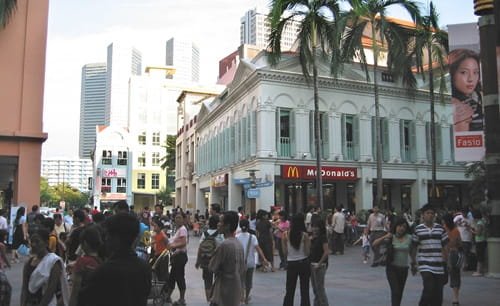
Beyond its products, Bugis Street is famous for its atmosphere. The dense rows of stalls, the overhead banners, the mix of local and tourist shoppers, and the persistent energy of vendors and buyers create a market experience that feels genuinely different from Singapore’s otherwise polished retail landscape. It is one of the few places in the city where bargaining remains a natural part of the shopping interaction.
Food and Eating
Bugis Street and its surrounding area have a strong food culture. Hawker stalls, casual restaurants, and food courts in the adjacent malls offer a wide range of local Singaporean dishes including laksa, char kway teow, satay, and rojak alongside international fast food options. The area around Bugis is considered one of the better zones for affordable eating in central Singapore.
Bugis Junction and Bugis+
The open-air market is complemented by two adjacent malls. Bugis Junction is notable for its glass-covered streets that recreate an indoor shophouse lane experience, while Bugis+ caters to a younger demographic with fashion, entertainment, and food and beverage outlets. Together they create a comprehensive retail ecosystem that extends the Bugis Street experience beyond the open-air market.
Cultural and Heritage Surroundings
The broader Bugis neighbourhood sits at the intersection of several of Singapore’s most culturally rich districts. Arab Street and Kampong Glam with their Malay and Middle Eastern character, the Hindu temples of Waterloo Street, and the institutional buildings of Bras Basah give the area a cultural depth that enriches any visit to Bugis Street beyond pure retail.
Best Time to Visit
Evenings between 5 PM and 10 PM are the most vibrant time to visit Bugis Street, when the market stalls are fully operational and the surrounding area comes alive with diners, shoppers, and visitors. Weekends bring the heaviest footfall. Weekday afternoons offer a more relaxed experience with easier navigation through the stalls.
Interesting Facts
- The original Bugis Street was cleared in 1985 and the current market is a reconstructed version that opened in 1991 in response to public demand for its revival.
- Bugis Street takes its name from the Bugis people of Sulawesi, Indonesia, who were among Singapore’s earliest and most influential trading communities.
- The street’s mid-twentieth century reputation as a nocturnal carnival destination made it one of the most internationally recognised streets in Southeast Asia during the 1960s and 1970s.
- Bugis MRT Station is one of the busiest in Singapore, reflecting the enormous footfall that the Bugis retail and cultural district generates daily.
- The glass-covered shophouse streets inside Bugis Junction are considered one of the more architecturally inventive retail concepts in Singapore, preserving the facade of colonial shophouses within a modern air-conditioned mall.
FAQs
Q1. Why is Bugis Street famous?
A: Bugis Street is famous for its affordable open-air fashion market, its colourful and controversial history as a nocturnal street carnival, and its position as one of Singapore’s most visited retail destinations.
Q2. Is the original Bugis Street still there?
A: The original Bugis Street was demolished in 1985. The current market is a reconstructed version that opened in 1991 nearby, retaining the open-air market format of the original.
Q3. What is the best time to visit Bugis Street?
A: Evenings and weekends are the most vibrant times. Weekday afternoons are quieter and easier to navigate.
Q4. How do I reach Bugis Street?
A: Bugis MRT Station on the East-West and Downtown Lines is directly connected to the area, making it one of the most accessible destinations in Singapore.
Q5. Is bargaining allowed at Bugis Street?
A: Yes, bargaining is practised at the open-air market stalls and is considered a normal part of the shopping experience there.
Q6. What food is available near Bugis Street?
A: Local Singaporean hawker food including laksa, char kway teow, satay, and rojak is available at stalls and food courts in and around the Bugis area.