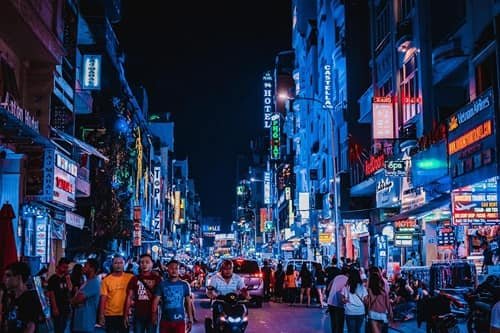
Bui Vien Walking Street is the most famous nightlife street in Ho Chi Minh City. Located in District 1 near the Pham Ngu Lao backpacker area, the street is known for bars, clubs, live music, neon lights, street food, and nonstop nightlife energy.
Often called “Backpacker Street” or “Western Street,” Bui Vien attracts tourists from around the world who come to experience Saigon’s party atmosphere and street culture. During the daytime, the area looks like a normal tourist district filled with cafés, hotels, and restaurants. But after sunset, the entire street transforms into one of Southeast Asia’s busiest nightlife destinations.
Today, Bui Vien Walking Street remains one of Vietnam’s most visited tourist entertainment zones.
| Feature | Details |
| Location | District 1, Ho Chi Minh City, Vietnam |
| Famous For | Nightlife, clubs, bars, street food |
| Local Name | Bui Vien Street / Soi Bui Vien |
| Main Attraction | Walking street nightlife |
| Popular Among | Tourists, backpackers, party lovers |
| Best Time to Visit | Nighttime |
| Nearby Area | Pham Ngu Lao Backpacker District |
| Known For | Neon lights and live music |
| Street Type | Pedestrian nightlife street |
| Peak Hours | 9 PM to 1 AM |
History of Bui Vien Walking Street
The history of Bui Vien Street goes back many decades before it became a nightlife destination.
Historical records mention that before 1949, the area was part of a village trail in old Saigon. In 1950, the road was named Bao Ho Thoai Street. Later, in 1955, it was renamed Bui Vien Street after Bui Vien, a Vietnamese diplomat and reformer from the Nguyen Dynasty period.
During the South Vietnam era, the surrounding area of Bui Vien, Pham Ngu Lao, and De Tham streets became known as the “International Crossroads.” The locality contained cafés, theaters, newspapers, and gathering spots popular among journalists, artists, and intellectuals.
In the 1980s and 1990s, tourism in Saigon started growing rapidly. Backpackers and foreign travelers began staying in the Pham Ngu Lao district because of its affordable hotels and restaurants. Over time, bars, pubs, and nightlife venues gradually expanded across Bui Vien Street.
A major turning point came in 2017 when the city officially converted Bui Vien into a pedestrian walking street during evening hours. Roads, sidewalks, lighting systems, and drainage infrastructure were renovated to support tourism and nightlife activity.
Today, Bui Vien Walking Street has become one of Vietnam’s most internationally recognized nightlife attractions.
Location and Connectivity
Bui Vien Walking Street is located in District 1 of Ho Chi Minh City near the famous Pham Ngu Lao backpacker area.
Its central location makes it accessible from almost every major tourist zone in the city.
By Airport
Tan Son Nhat International Airport is located around 7–8 kilometers from Bui Vien Street. Taxi and ride-hailing services regularly connect the airport with District 1.
By Road
Visitors usually reach the street through:
- Taxis
- Grab services
- Buses
- Motorbike taxis
Nearby Landmarks
Some important nearby attractions include:
- Ben Thanh Market
- Nguyen Hue Walking Street
- Pham Ngu Lao Area
- Saigon Opera House
What Is Bui Vien Walking Street Famous For?
1. Nightlife and Party Culture
The biggest reason behind the popularity of Bui Vien Walking Street is nightlife.
Every evening, the street fills with:
- Loud music
- DJs
- Neon signs
- Dance clubs
- Crowded bars
- Party tourists
The atmosphere is often compared with Bangkok’s Khao San Road.
2. Bars and Nightclubs
Bui Vien contains hundreds of nightlife venues including:
- Beer bars
- Rooftop lounges
- Dance clubs
- Cocktail bars
- Sports pubs
Popular clubs and bars attract international tourists, backpackers, and local young crowds.
3. Backpacker Culture
The area became famous among budget travelers because of:
- Cheap hostels
- Affordable food
- Budget hotels
- Street cafés
- Social nightlife atmosphere
Backpackers from different countries often gather here to meet travelers and enjoy nightlife.
4. Street Food and Restaurants
Bui Vien is also known for food culture.
Visitors can find:
- Vietnamese street food
- Seafood
- BBQ dishes
- International cuisine
- Local beer stalls
The street remains active almost throughout the night because of food vendors and restaurants.
5. Live Music and Street Performances
Live bands, DJs, dancers, and fire performers regularly entertain crowds on the street.
This gives Bui Vien a festival-like atmosphere every night.
Best Time to Visit Bui Vien Walking Street
The best time to visit Bui Vien Walking Street is after sunset.
The street becomes busiest between 9 PM and 1 AM when clubs, bars, and music venues are fully active.
Weekends usually attract the largest crowds and strongest party atmosphere.
Interesting Facts About Bui Vien Walking Street
- Bui Vien was officially converted into a walking street in 2017.
- The area is widely called “Backpacker Street.”
- It is one of Vietnam’s most famous nightlife destinations.
- The street is located inside the Pham Ngu Lao tourist district.
- Bui Vien attracts tourists from around the world every night.
Challenges Faced by the Area
Despite its popularity, Bui Vien Walking Street also faces criticism and urban challenges.
Some visitors and local reports mention:
- Noise pollution
- Overcrowding
- Tourist scams
- Traffic congestion
- Excessive commercialization
Recent discussions also criticized the loss of local cultural identity because of aggressive nightlife commercialization and chaotic street conditions.
Still, the street continues to remain one of Southeast Asia’s most famous nightlife districts.
FAQs About Bui Vien Walking Street
Q1. Why is Bui Vien Walking Street famous?
A: Bui Vien Walking Street is famous for nightlife, clubs, bars, live music, backpacker culture, and street food.
Q2. Where is Bui Vien Walking Street located?
A: The street is located in District 1 of Ho Chi Minh City.
Q3. Why is Bui Vien called Backpacker Street?
A: The area became popular among budget travelers and backpackers because of cheap hostels, nightlife, and affordable restaurants.
Q4. When did Bui Vien become a walking street?
A: Bui Vien officially became a pedestrian walking street in 2017.
Q5. What happens on Bui Vien Street at night?
A: The street fills with bars, music, DJs, dancers, food stalls, and tourists enjoying nightlife activities.
Q6. Is Bui Vien Walking Street safe for tourists?
A: The area is generally considered tourist-friendly, but visitors are advised to stay alert in crowded nightlife conditions and avoid scams.
Q7. What are the major problems faced by Bui Vien?
A: Noise pollution, overcrowding, commercialization, and nightlife-related disturbances are some of the major issues affecting the area.