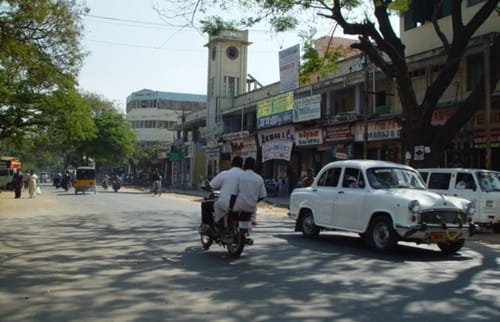
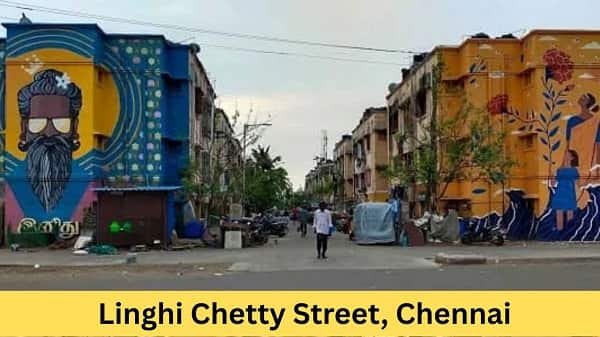
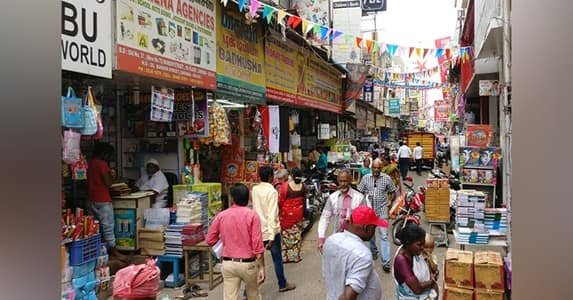
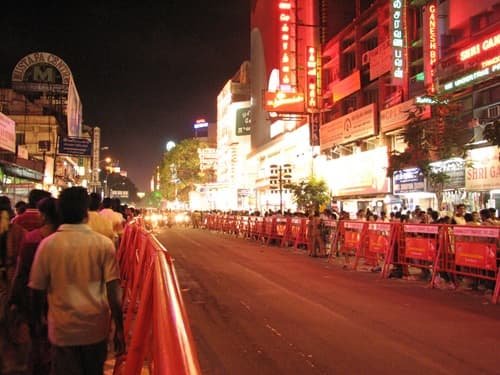
Few shopping streets in India match the sheer intensity, density, and commercial energy of Ranganathan Street. Located in T Nagar, one of Chennai’s most iconic neighbourhoods, this pedestrian-friendly road is widely regarded as one of the busiest shopping streets in Asia. On any given evening, thousands of shoppers pack its narrow width shoulder to shoulder, moving past rows of textile shops, jewellery stores, footwear outlets, and street vendors in a continuous human current that rarely slows down.
For Chennai residents, Ranganathan Street is where major purchases happen. Sarees for weddings, jewellery for festivals, school uniforms, household goods — it is the default destination for families across the city when serious shopping is on the agenda. For visitors, it offers an overwhelming but deeply authentic immersion into Tamil commercial culture at its most vibrant.
| Feature | Details |
| Location | T Nagar, Chennai, Tamil Nadu |
| Nearby Area | Panagal Park, Usman Road, Pondy Bazaar |
| Length | Approximately 800 metres |
| Famous For | Textiles, silk sarees, jewellery, footwear, street shopping |
| Historical Period | Developed through mid-20th century alongside T Nagar’s growth |
| Best Time to Visit | Weekday mornings; avoid weekends and festival seasons |
| Nearest Landmark | Panagal Park and T Nagar Bus Terminus |
| Popular Crowd | Families, women shoppers, tourists, wedding buyers |
| Main Attractions | Silk saree shops, jewellery stores, street vendors, Pondy Bazaar |
| Street Type | Pedestrian-only commercial street |
History of Ranganathan Street
The history of Ranganathan Street is closely tied to the development of T Nagar as a planned residential and commercial neighbourhood in Chennai. T Nagar, short for Teynampet Nagar, was developed in the early twentieth century as a planned extension of the city, named after the then Chief Minister of the Madras Presidency. The neighbourhood attracted a predominantly Tamil middle-class population and gradually developed a strong commercial identity.
Ranganathan Street emerged as the primary retail corridor of T Nagar as the neighbourhood grew through the mid-twentieth century. Textile merchants, many of them from established trading communities, set up shops along the street that quickly became known for the quality and variety of their silk and cotton offerings. As Chennai expanded and T Nagar became one of its most densely populated and prosperous neighbourhoods, Ranganathan Street grew with it.
The street was eventually pedestrianised, a decision that transformed it into one of the most walkable and commercially intense shopping corridors in South India. Without vehicle traffic competing for space, the street dedicated itself entirely to retail and became progressively more crowded and commercially successful. Over the decades it attracted larger establishments, established retail chains, and a permanent community of street vendors who add their own layer of affordable shopping to the mix.
Today Ranganathan Street is frequently cited as one of the highest revenue-generating retail streets in India on a per-metre basis, a reflection of the extraordinary commercial density it sustains every single day.
Location and Connectivity
Ranganathan Street runs through the heart of T Nagar, flanked on both sides by continuous retail frontage and connected at its ends to Usman Road and the broader T Nagar commercial district. Panagal Park, a well-known public garden and landmark, sits adjacent to the street and serves as a useful orientation point for first-time visitors.
By Metro
T Nagar has good metro connectivity through the Chennai Metro network, with stations providing access from central and northern parts of the city within a comfortable journey time.
By Bus
T Nagar Bus Terminus is one of the busiest in Chennai, with routes connecting virtually every part of the city and surrounding districts. For most Chennai residents, the bus remains the most practical way to reach Ranganathan Street.
By Cab or Auto
App-based cabs and auto-rickshaws drop visitors at the edges of the pedestrianised zone. The street itself must be navigated on foot, which is the only practical way to shop here in any case.
Nearby Landmarks
Some popular nearby places include:
- Panagal Park
- Usman Road jewellery district
- Pondy Bazaar
- T Nagar Bus Terminus
- Thyagaraya Road
What Is Ranganathan Street Famous For?
1. Silk and Cotton Sarees
Ranganathan Street is most celebrated for its extraordinary concentration of textile and saree shops. Kanchipuram silk sarees, cotton sarees, dress materials, and blouse fabrics are available across dozens of shops ranging from large multi-storey establishments to compact family-run stores. During wedding seasons and festivals, these shops operate from early morning to late at night to meet demand.
2. Jewellery
The street and its immediate surroundings, particularly Usman Road, form one of the most concentrated jewellery retail districts in South India. Gold, diamond, and silver jewellery shops attract buyers from across Tamil Nadu, many of whom make specific trips to T Nagar for major jewellery purchases during Akshaya Tritiya and the wedding season.
3. Footwear
Ranganathan Street has a large and diverse footwear market. Shops selling sandals, formal shoes, casual footwear, and traditional kolhapuri styles are spread throughout the street at price points that cater to every budget. The variety and competitive pricing make it a preferred destination for footwear shopping across the city.
4. Street Vendors and Budget Shopping
Lining the edges of the pedestrian street is a continuous row of informal vendors selling everything from hair accessories and plastic goods to imitation jewellery, toys, and seasonal items. These vendors offer some of the most competitive prices in Chennai and are particularly popular with younger shoppers and budget-conscious families.
5. Festive and Wedding Shopping
Ranganathan Street reaches its peak intensity during the Tamil wedding season and major festivals including Pongal, Diwali, and Navratri. Entire families descend on the street for days at a time to complete their festive shopping, and the atmosphere during these periods is a uniquely Tamil celebration of commerce, colour, and community.
Best Time to Visit
Weekday mornings between 10 AM and 1 PM offer the most comfortable shopping experience, when crowds are manageable and shop staff have time to assist customers properly. Evenings and all weekend hours bring extremely heavy footfall that makes moving through the street a test of patience.
Festival seasons, while atmospheric and exciting, are best approached only by those comfortable with very dense crowds and limited personal space.
Interesting Facts
- Ranganathan Street is frequently listed among the busiest shopping streets in Asia by footfall per square metre.
- The street is entirely pedestrianised, making it one of the few major retail corridors in Chennai free of vehicle traffic.
- During peak festival days, daily sales figures across Ranganathan Street are estimated to run into several crores of rupees.
- The combination of Ranganathan Street and Usman Road makes T Nagar arguably the single most important retail destination in Tamil Nadu.
- Many of the textile shops on the street have been operated by the same families for three or four generations.
FAQs
Q1. Why is Ranganathan Street famous?
It is famous for textiles, silk sarees, jewellery, and footwear, and is considered one of the busiest and most commercially dense shopping streets in Asia.
Q2. Is Ranganathan Street pedestrian only?
Yes, the street is fully pedestrianised and must be navigated entirely on foot.
Q3. What is the best time to visit? Weekday mornings are the most comfortable. Weekends and festival seasons bring very heavy crowds.
Q4. How do I reach Ranganathan Street?
T Nagar Bus Terminus is the most convenient access point. Metro and cab services also connect the area well to the rest of Chennai.
Q5. What should I buy on Ranganathan Street?
Silk sarees, cotton fabrics, gold jewellery, and footwear are the most celebrated purchases. Street vendors offer affordable accessories and everyday items.